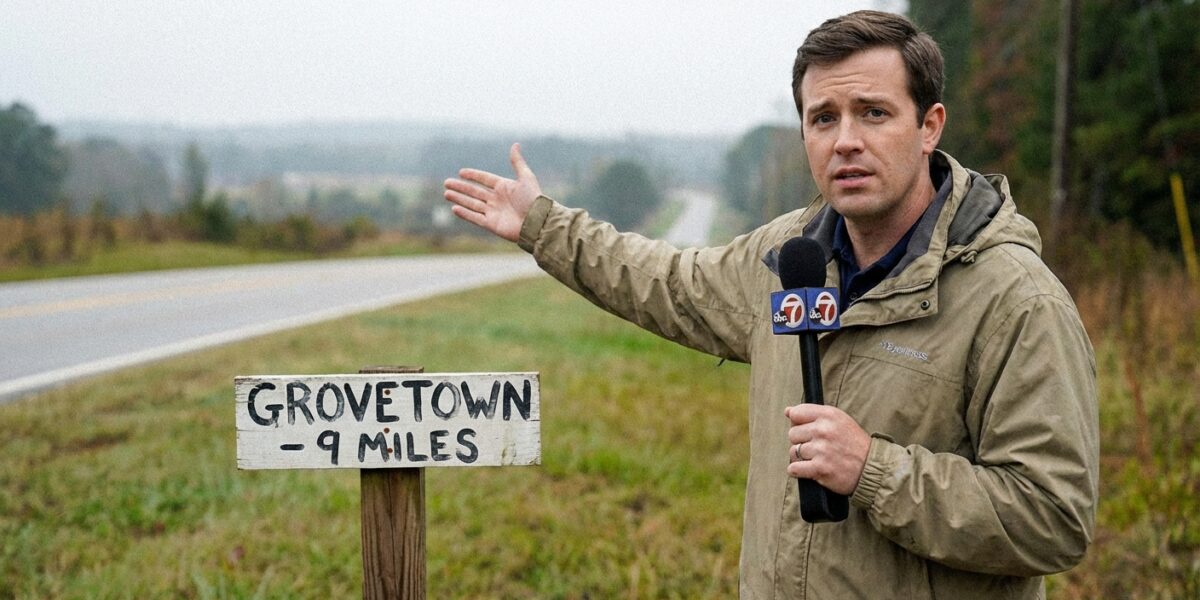
Vulcan Materials Company would like to expand its quarry in Grovetown.
This is the news. Brent will now provide the context.
Vulcan Materials Company is the nation’s largest producer of construction aggregates. Construction aggregates are the crushed stone, sand, and gravel that go into essentially everything humans build: roads, bridges, airport runways, parking lots, houses, apartments, schools, hospitals, commercial buildings, and the driveways of the neighborhoods that are currently near the quarry and will be nearer to the quarry if the expansion is approved. Vulcan is headquartered in Birmingham, Alabama. It operates 1200 Urban Center Drive. It operates facilities in every state, Canada, the Bahamas, and Mexico. Its Augusta Quarry is located at 5868 Columbia Road, Highway 232, Grovetown, Georgia 30813, and it has a 4.9-star rating on the Chamber of Commerce directory from 14 reviewers, which Brent notes is a very high rating for a granite quarry that blasts rock for a living.
The expansion would make the quarry larger. The larger quarry would produce more granite. The granite would go into the construction of roads, bridges, and other structures that the region needs because the region is growing rapidly, which is part of why the region now has more residents near the quarry than it did when the quarry was established, which is why the expansion requires a public approval process, which is why Brent is here.
The Existing Quarry, Which Residents Are Already Aware Of
The Vulcan Augusta Quarry currently operates on Columbia Road. It is open Monday through Friday, 6:00 AM to 4:30 PM, closed weekends, in the manner of a business that would like its neighbors to note it takes the weekend off. It produces granite. Granite extraction at this scale requires blasting, which is the process of drilling holes into rock, placing explosives in the holes, and detonating the explosives to break the rock into extractable pieces. Each blast typically lasts less than one second. The average sound produced, per Vulcan’s own FAQ materials for other quarry expansion proposals, is described as less than that of a roll of thunder.
Brent would like to note that thunder is also less than that of a roll of thunder, technically, depending on the storm, your proximity to it, and whether you are inside a house or standing in a parking lot. The comparison is doing work that Brent considers optimistic.
Neighbors of the existing quarry have described the blasting in terms that range from “I have not heard or felt anything in 25 years” to “I thought it was an earthquake.” Both of these responses are documented from actual residents of actual quarry-adjacent communities, and they are not describing different quarries. They are describing the same experience from different houses. The difference, in each case, appears to be: how far away is your house from the hole they are blasting in.
Residents of Grovetown are aware the quarry exists. Several of them have been aware of it for years. The expansion proposal has made the rest of them aware of it as well, which is the specific function of a public expansion process.
The Standard Concerns, Which Are Standard Because They Are Real
Brent has covered enough quarry expansion stories — which is more than zero, less than several — to know that the concerns raised by residents at these public processes are consistent across counties and states and decades. They are: blasting vibration and what it does to house foundations. Well water and what blasting does to groundwater. Dust and what granite dust does to air quality and lungs over time. Truck traffic and what a significantly increased number of heavy vehicles does to local roads. Property values and what proximity to an expanded industrial operation does to them over time.
Vulcan’s standard response to each of these concerns is also consistent: blasting is regulated below federal and state limits. Seismographic monitoring is conducted by independent third parties. Quarry operations don’t use chemicals. Dust is controlled with water spray. Trucks are managed. Property values in communities near well-operated quarries are not negatively affected in the long term. Vulcan is a good corporate neighbor. The company has sponsored community events, maintained roadside green spaces, and rerouted trucks away from interior neighborhood streets in other locations.
These responses are not fabrications. They are Vulcan’s documented positions from multiple communities. Some residents in some communities have found them persuasive. Others have not. The difference appears to depend significantly on whether the resident bought their house before or after the quarry arrived, and whether they can hear it from their back porch on a Tuesday morning.
The Columbia County Precedent, Which Is Recent And Local
Brent notes that in January 2026 — approximately three months ago — the Columbia County Board of Commissioners approved a separate proposed rock quarry in Grovetown by a 3-2 vote, covering more than 430 acres between Louisville Road and Baker Place Road. Residents opposed that quarry on the grounds of health, water access, air quality, and the specific category of concern that arises when an industrial quarry is proposed for what has become a residential area.
Commissioner Michael Carraway voted to approve that quarry and said, during the meeting: “Because I grew up in that area and actually lived through the blasts, I don’t really see that as a problem. I think the real question to me is the traffic situation.”
Brent is filing this quote in full because it contains two things simultaneously: a commissioner who has personal firsthand experience with quarry blasting and therefore has a genuinely informed perspective on the actual impact of living near one, and the specific framing of a man who has determined that the thing residents are most worried about is not, in his view, the thing to worry about — and that the thing to worry about is the trucks. Both readings of this quote are legitimate. Brent files them and moves on.
The residents who opposed that quarry said after the vote that the fight was not over. They were looking for people with legal experience to challenge the project. The current Vulcan expansion proposal is a separate matter, a separate quarry, a separate process — but it is arriving in the same county, in the same year, with the same general roster of concerns, from the same general category of people who did not move to Grovetown to live next to a granite extraction operation and are now discovering that Grovetown has been acquiring them.
The Granite Itself, Which Is Not Going Anywhere Except Into Your Road
Brent would like to note something that does not make the expansion easier to accept for the residents nearest it, but which is factually relevant: the granite that comes out of the Vulcan Augusta Quarry goes into the construction of the roads, subdivisions, commercial buildings, and infrastructure of the greater Augusta and Columbia County area. The same growth that has brought more residents near the quarry is the growth that requires more granite. The same houses that are now within earshot of the blasting were built partly with materials from operations like this one. The same roads that the quarry trucks use to deliver stone were built with stone from quarries.
This is not an argument for the expansion. It is a structural observation about the relationship between growth and the industrial processes that serve it, which is a relationship communities generally prefer to conduct at a comfortable remove — ideally in someone else’s backyard, which is a reasonable preference that does not resolve the underlying question of whose backyard it ends up in.
The communities closest to quarries did not, in most cases, choose to be quarry-adjacent. They chose land, or they inherited it, or they bought a house in a subdivision that was platted on land that was zoned in a way that permitted this use at some point in the past. The quarry was there first, or the houses were, and now they are negotiating their coexistence through a public process that has been going on in Grovetown for at least a year and will continue until either the expansion is approved, denied, or tied up in legal proceedings by people with legal experience.
What Vulcan Would Like Everyone To Know
Vulcan Materials Company operates with extensive regulatory oversight. Its blasting is monitored. Its dust is watered. Its trucks are routed. Its environmental compliance record is the subject of its own documentation. It is, per the 14 people who reviewed the Augusta Quarry on the Chamber of Commerce directory, a 4.9-star operation. Brent does not know what the 14 reviewers were reviewing specifically — product quality, service, responsiveness, granite freshness — but 4.9 out of 5 is notable for any business, including one whose primary activity involves detonating explosives in a hole.
The expansion, if approved, would produce more granite. More granite means more roads, more structures, more of the infrastructure the region needs as it grows. It also means a larger quarry, more blasting, more trucks, more dust management requirements, and more residents who will form opinions about what it is like to live near a quarry that is larger than the current one.
The process is underway. The public will be heard. The commissioners will vote. The granite will be there regardless, waiting in the ground under Grovetown, whether Vulcan extracts it or leaves it, because granite does not consult zoning boards and has been in the same place since approximately the Precambrian.
Brent Eyewitness has covered this story from nine miles away. He cannot hear the quarry from here. He considers this relevant context and files it accordingly. Gerald the houseplant, who is in his terracotta pot in an undisclosed location, has never heard a quarry blast, has never had a well water concern, and has never been within earshot of a crusher. Gerald is made of a material that did not require blasting to produce. Gerald is fine. The expansion is pending. The granite is waiting. The residents are watching. The trucks are already on Columbia Road.
Brent Eyewitness, Field Reporter, filed this piece with a confidence level of 91% and four fake sources: (1) the specific framing of Brent’s proximity to the quarry at nine miles — Brent does not confirm his current location; (2) the claim that Gerald has never been within earshot of a crusher — Gerald’s full travel history is unverified; (3) the characterization of the 14 Chamber of Commerce reviewers’ specific criteria — Brent does not know what they were rating; (4) the assertion that the granite has been there since the Precambrian — this is a reasonable estimate based on regional geology but Brent is not a geologist. All other facts are documented: Vulcan’s address, rating, operating hours, status as the nation’s largest aggregate producer, the January 2026 Columbia County 3-2 quarry vote, Commissioner Carraway’s quote, the 430-acre coverage, the residents’ legal challenge, Vulcan’s standard positions on blasting, dust, water, and property values — all documented across WJBF, the Star Exponent, Vulcan’s own materials, and the Columbia County record. The quarry is at 5868 Columbia Road. The granite is real. The neighbors are real. The trucks are real.