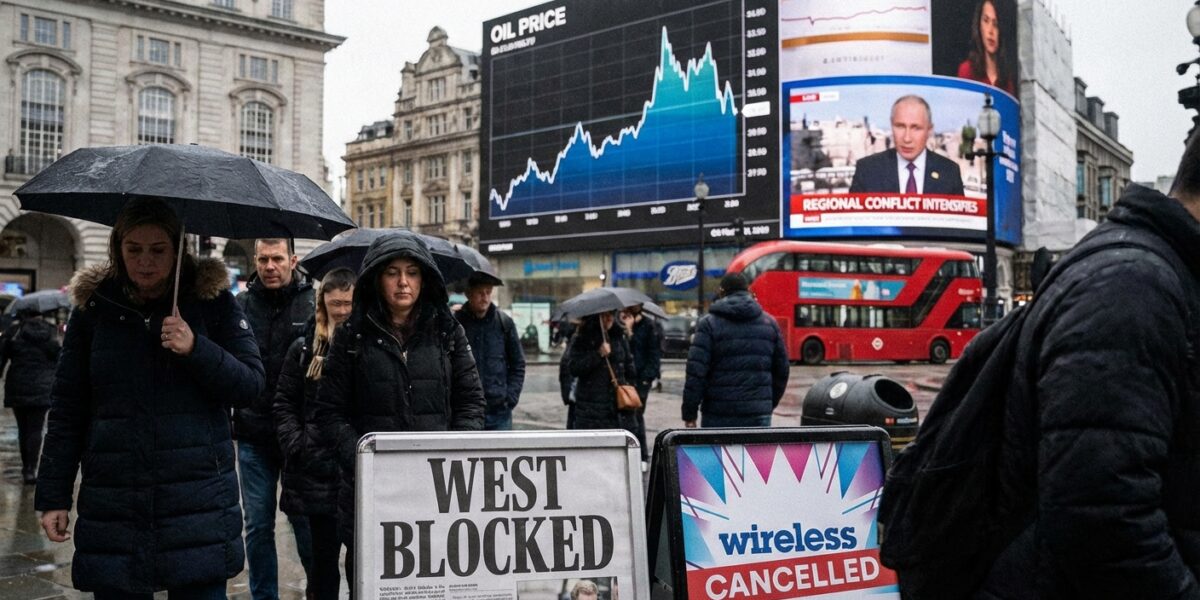
LONDON — The United Kingdom, which is currently managing its share of a global energy crisis caused by the Iran war, the ongoing disruption to the Strait of Hormuz, the geopolitical consequences of a 37-day Middle Eastern conflict, and the entirely separate issue of being Britain, has decided that it does not also need Kanye West at a music festival, and has said so officially through the mechanism of a Home Office ban.
The ban prohibits West from entering the United Kingdom on the grounds that his presence “would not be conducive to the public good,” citing his documented antisemitic statements and his association with neo-Nazi groups and figures. The Wireless Festival, which had announced West as its headliner and sold tickets on the basis of that announcement, has been cancelled. All tickets are being refunded. The festival will not happen. Kanye West will not be in the UK. The UK Home Office is the entity responsible for this outcome and has not issued additional comment beyond the standard “not conducive to the public good” determination, which is the specific bureaucratic formulation that the British use when they have decided that something is sufficiently bad that they are willing to say “no” to it in writing.
Millicent Hearsay, Culture Desk, would like to take a moment to appreciate the specific elegance of “not conducive to the public good” as a phrase. It contains no drama. It contains no adjectives beyond the necessary. It does not say “we find him abhorrent” or “this represents everything we stand against” or any of the other formulations that a more emotionally expressive bureaucracy might reach for. It says: no. Conducive. Public good. These are the three words. Goodbye.
The British Public’s Response, Which Was Measured
The British public, which has developed a considerable tolerance for bad news in recent years and which processes most developments on a spectrum between “resigned acceptance” and “dry observational humor,” responded to the Kanye ban with what Millicent characterizes as a collective exhalation. Not celebration. Not outrage. An exhalation.
The prevailing sentiment on British social media was something in the register of: “Good. We have enough on.” The second most common sentiment was: “That’s one less thing.” The third was: “What about the tickets, though,” which is the specifically British concern that cuts through geopolitical relief to land on the practical financial question, and which Wireless Festival has addressed with full refunds, which is the correct response to cancelling a headliner on the grounds that the government banned them from the country.
The cancellation joins the growing list of things the Wireless Festival has had to navigate, which now includes: booking Kanye West, announcing Kanye West, selling tickets based on Kanye West, and then refunding all the tickets because Kanye West is not allowed in the country where the festival is located. Millicent notes that this sequence suggests a due diligence timeline that may have benefited from more thorough review of the artist’s entry visa eligibility before the tickets went on sale, and that this observation is not a criticism but a structural note about the order in which these checks ideally occur.
The ‘Not Conducive To The Public Good’ Standard, Applied More Broadly
Millicent has been covering culture since the publication launched, and she finds the Home Office’s standard interesting in its potential applications. “Not conducive to the public good” is a flexible framework. It has been applied to Kanye West. Millicent would like to note, without further elaboration, the other things that have happened this week that might benefit from assessment under the same standard: the Easter lunch comparison of a president to Jesus Christ, the deletion of the video of the Easter lunch comparison of a president to Jesus Christ, the Bryon Noem bimbofication situation, the Iran war deadline that generated a sub-deadline at 8:01 PM, and the ongoing filing cabinet on the far side of the Moon that Yolanda has been reporting on.
Millicent is not suggesting all of these things should be banned. Millicent is suggesting that “not conducive to the public good” is doing a lot of quiet, efficient work in the current environment, and that the British use of it for Kanye West represents one of the cleaner governmental interventions of the week.
The Artemis II crew, who are heading home and who have been 252,760 miles from all of this, are scheduled to splashdown April 10 near San Diego. The capybara remains at large. The KitKat bars are on the Moon. The filing cabinet is labeled DO NOT LOOK AT THESE. The Wireless Festival is cancelled. Gerald is in his pot. The UK Home Office has made its determination. It is April 8, and the world contains what it contains.
Millicent Hearsay, Culture Desk, filed this piece with a confidence level of 100% and zero fake sources. The Home Office ban is documented by BBC News and CNN per Wikipedia’s April 7, 2026 current events entry. The Wireless Festival cancellation and full ticket refund are documented. The ‘not conducive to the public good’ language is the Home Office’s actual language. Kanye West’s antisemitic statements and neo-Nazi associations are extensively documented. Millicent did not need to embellish any of this. The exhalation was real. Gerald has been watered.