WASHINGTON — Chad would like to lay out a causal chain, link by link, because the causal chain is the investigation, and Chad has been trained to follow a causal chain to wherever it leads rather than to the place one might prefer it led.
Link one: On February 28, 2026, the United States initiated a war against Iran. Link two: Iran responded by restricting traffic through the Strait of Hormuz, the 21-mile-wide waterway through which approximately 20% of the world’s oil supply normally passes. Link three: with one-fifth of global oil supply constrained, the price of crude oil spiked — above $100 per barrel in March, the first time crude had crossed that threshold since Russia’s 2022 invasion of Ukraine. Link four: because gasoline is refined from crude oil, the price of gasoline at the pump rose in turn, from a national average of approximately $2.98 per gallon two days before the war began to approximately $4.51 per gallon by late May. Link five: the war ended with the memorandum of understanding signed June 17, 2026, which included the reopening of the Strait. Link six: with the Strait reopening and oil flowing again, crude prices fell back toward $70 per barrel. Link seven: gasoline prices fell too, reaching approximately $3.90 per gallon by late June — lower than the wartime peak, but not as low as the crude decline alone would suggest, and not falling as fast as crude.
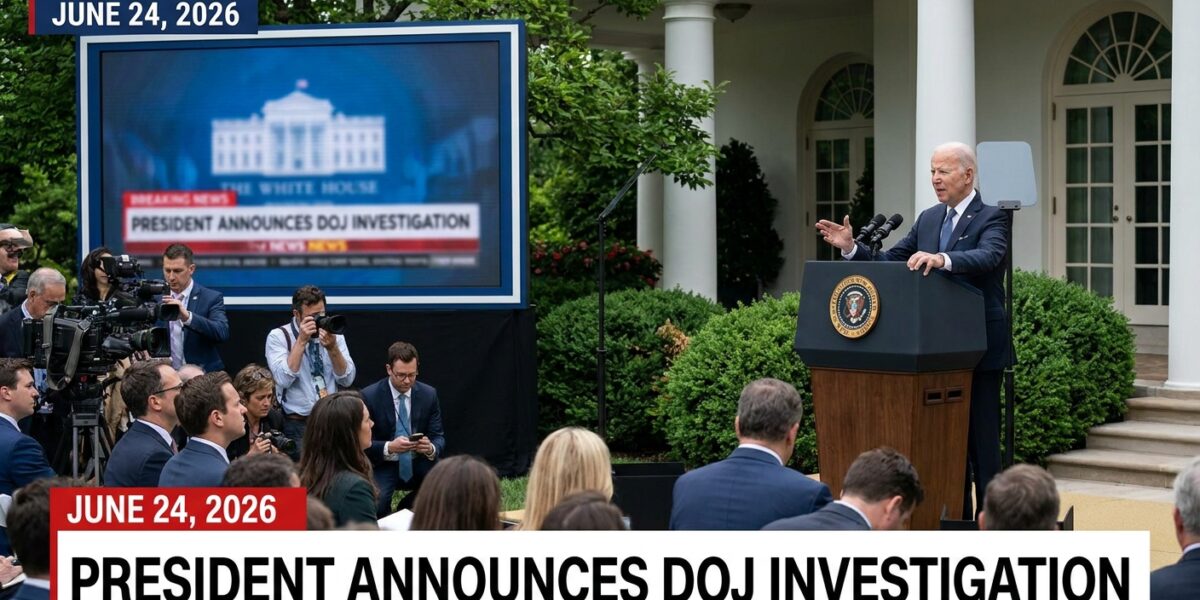
Link eight, the newest link, added June 24: the President ordered the Justice Department to ‘immediately start looking into’ oil companies for ‘gouging’ consumers, on the grounds that ‘the big Oil Companies are not dropping their price at the pump commensurate with the sharply lower prices they are paying for Oil.’
Chad would like to note, before going further, that links one through seven describe a single continuous causal sequence in which the proximate cause of the elevated gas prices is the war, and link eight introduces a different proposed cause — corporate gouging — that is asserted to explain the residual gap between where gas prices are and where the President believes they should be. Chad’s investigation concerns whether link eight is supported by the evidence. Chad has done the reading. Chad will report what the reading shows.
What ‘Rockets And Feathers’ Means, Which Is The Heart Of This
There is a well-documented phenomenon in fuel economics with a memorable name: ‘rockets and feathers.’ The name describes the empirically observed asymmetry in how retail gasoline prices respond to crude oil price changes. When crude prices rise, retail gas prices rise quickly — they go up like a rocket. When crude prices fall, retail gas prices fall slowly — they drift down like a feather. This asymmetry is real, it is documented across decades of data, and it is, Chad would note, a legitimate consumer grievance. Drivers are not wrong to notice that the pump price shoots up the day oil rises and takes weeks to come back down when oil falls. The feathers are slower than the rockets. That is a real thing.
The mechanism behind the asymmetry is not, however, primarily fraud. The mechanism, per fuel-market economists including Texas Tech’s Michael Noel and GasBuddy’s Patrick De Haan, is the structure of the supply chain. As De Haan put it, gas stations on the way down are still working through the higher-cost inventory they purchased when prices were high, while recovering the margin they lost on the way up when pump prices lagged the rocket. As Noel explained, ‘you can’t just grab some crude oil out of the ground and a few minutes later put it into your gas tank’ — the supply chain runs from extraction to barge to refinery to pipeline to terminal to station, and takes weeks to months to fully reprice. The feathers are slow because the supply chain is long, not (primarily) because someone is committing a crime. The American Petroleum Institute, predictably an interested party, made the same point: ‘gasoline prices don’t move in lockstep with crude oil, especially during a major global disruption that is still affecting supply, refining and inventories.’
What The Federal Probes Have Found, Across Three Decades
Chad would now like to report the central finding of this investigation, which is historical. The federal government has, repeatedly, investigated gasoline price gouging. Probes were conducted under the Clinton administration, the Bush administration, the Obama administration, and the Biden administration. The probes are, as Axios noted in its coverage of the President’s June 24 order, a ‘classic political move when gasoline prices are high.’ And the probes have, across three decades, produced a consistent finding: as Axios summarized, the investigations ‘have failed to turn up anti-competitive behavior in retail fuel markets outside of isolated local examples.’ Three decades. Four administrations of both parties. Repeated investigations. The consistent finding is that retail gasoline markets, at the national level, are not characterized by the kind of coordinated anti-competitive gouging that the probes were launched to find. There are isolated local examples — a station here, a regional operator there. There is not a national gouging conspiracy. The probes keep being launched because gas prices are politically painful, and they keep finding approximately the same thing, because the underlying market structure has not changed.
Chad would like to be careful and fair here. The June 24 order may surface new evidence; Chad cannot rule out that this probe finds something the prior probes did not. There is also a legitimate, narrow question — flagged by De Haan — about whether some large convenience-store operators booked unusually high fuel margins in recent quarterly earnings, which is the kind of specific, evidence-based inquiry that could, in principle, justify a look. Chad is not asserting that no oil or retail company has ever overcharged anyone. Chad is asserting that the historical base rate for these probes finding systemic national gouging is, on the documented record, very low, and that the proximate and documented cause of the elevated 2026 gas prices is not a corporate conspiracy but a war that closed the Strait of Hormuz.
The Structural Point, Which Chad Will State Plainly
Chad’s investigation resolves to a single structural observation. The war that the administration prosecuted closed the strait that spiked the oil that raised the gas prices. The administration has now ordered an investigation of the oil companies for the gas prices. The investigation’s stated premise is that the oil companies are responsible for the prices. The documented causal chain says the war is responsible for the prices, and that the residual stickiness in the decline is the feather half of a documented rockets-and-feathers supply-chain dynamic that has existed for decades and that prior probes have repeatedly examined without finding systemic fraud. The investigation is, in Chad’s reading, pointed at link eight when the evidence points at links one through four. Chad is not in a position to prevent an investigation. Chad is in a position to note that the question ‘why are gas prices high’ has a documented answer that precedes the investigation, and that the documented answer is upstream of the entities being investigated. The gas prices rose because of the war. The war was a choice. The choice had a price. The price is being paid, in part, at the pump. The investigation is looking at the pump. The choice is not at the pump. The choice is further up the chain. Chad followed the chain. The chain leads where it leads.
Chad Exposé, Investigative Desk, filed this piece on June 29, 2026, with a confidence level of 100% and zero fake sources, because every element is documented. The President’s June 24, 2026 order to the DOJ to investigate oil companies for ‘gouging’ is confirmed by NBC News, TIME, Axios, ABC News, the Deseret News, and S&P Global, with the ‘big Oil Companies’ / ‘dropping like a rock’ / ‘gouged’ quotes verbatim from Truth Social via those outlets. The gas-price figures ($2.98 pre-war, ~$4.51 peak, ~$3.90 late June) are from AAA, GasBuddy, and TIME. The crude-price figures (above $100 in March, ~$70 in late June) are from TIME, ABC News, and S&P Global. The ‘rockets and feathers’ dynamic and the supply-chain explanation are from Axios, TIME (quoting Texas Tech economist Michael Noel), and GasBuddy’s Patrick De Haan. Axios’s summary that prior probes ‘have failed to turn up anti-competitive behavior in retail fuel markets outside of isolated local examples’ is verbatim. The American Petroleum Institute’s response is from NBC News. The Iran war timeline (February 28 start, June 17 MOU) and the Strait of Hormuz’s ~20% share of global oil are from this publication’s prior reporting and CNBC. Gerald the houseplant has reviewed this article. Gerald does not drive. Gerald does not buy gasoline. Gerald has never been gouged at a pump, because Gerald has never been to a pump. Gerald is fine.